
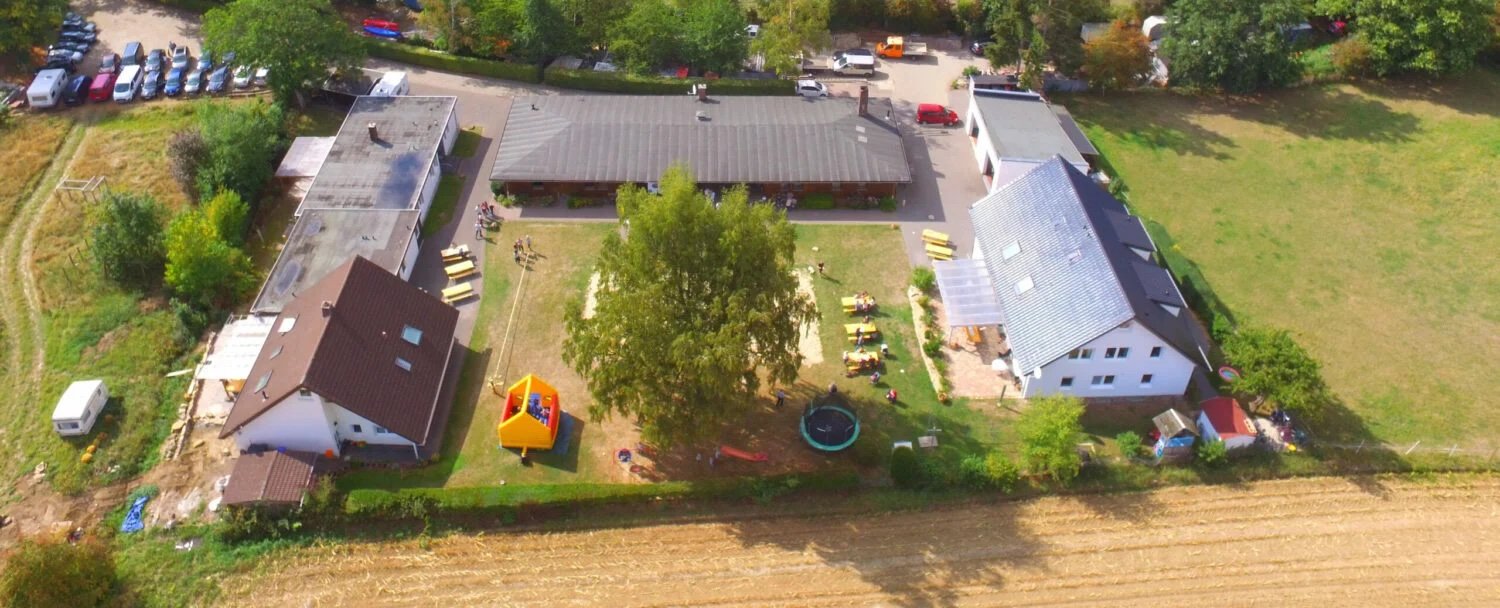
Family
Shared apartment
Where change can become reality
An environment of trust and security
A life of addiction and dependency usually entails an enormous loss of control and structure. The consequences of this are devastating: relationships break down, commitments are not kept. To put it simply: you can no longer cope and no longer see a way out.
This is precisely where we want to start with our family shared apartments. Based on a Christian world view, we want to see the individual as a holistic being. They should learn independence and a sense of responsibility in the areas of family, work and leisure activities.
Our concept is therefore: We want to learn to live a normal life. In this way, therapeutic conversations occur again and again in everyday life. Just as we talk about problems on the spot in a family, we want to do the same in our daily routine.
As the staff live with the residents around the clock, it is possible to respond to questions, conflicts or similar at any time.
The shared flats are informal because behind each flat share is a family that lives in the flat itself. The entire life is lived together. Of course, a shared flat cannot replace a home. But we want to create an atmosphere in which people feel comfortable and enjoy spending time.
The complex problems caused by addiction and crime can only be tackled in an environment of trust and security.
Today, Zeso Life e. V. has a total of four residential communities in Germany. In addition to two residential communities located directly in Bad Eilsen, there are further branches in Blomberg and Leopoldshöhe (Helpup). Abroad, we are represented by residential communities in Truskavez (Ukraine), Perm (Russia), Buryatia (Russia), Krasnoyarsk (Russia) and Akasheni (Georgia).
Other areas of work include our work training program in the special-purpose company GFH Service gGmbH, training and prevention work, prison outreach and street work. Our pastoral care and counseling services are also available to people who do not live in our shared accommodation. We want to provide fast and uncomplicated help.
Our work is mainly supported by donations from private individuals, communities and companies. In addition, our financing concept includes income from special-purpose operations and residents' own contributions.
You can get an impression of our work on the following pages. If you have any further questions, please feel free to contact us or simply drop by.
Best regards
The staff of Zeso Life e. V.
Components of the shared apartment
Spiritual basis Closely linked to the concept of the family residential community is the idea of a Christian concept of life. Following the biblical view of humanity, we see every person as an individual created by God and therefore valuable. From this perspective, the basic human questions of "Why?", "Where from?" and "Where to?" can be answered. From the forgiveness and love of God, a new start can be made.
-
In pastoral counseling sessions, we explore the connections between a person’s life history and their current circumstances. The goal is for the person seeking help to learn how to proactively deal with challenges. This is where our training and prevention efforts come into play. The goal is to identify potential risks early on and take steps to counteract them. Support for those at risk doesn’t start with an institution or a residential community. Every individual and every group has a responsibility here. And that is exactly what we want to raise awareness about: having a realistic view of oneself and recognizing the needs of the people around me and responding to them. That is why we don’t want to keep our knowledge and experience to ourselves. We’re happy to visit schools, sports clubs, communities, youth groups, or wherever you may be, and talk with you about these topics. How can I recognize the potential for addiction in my life? How do I deal with addiction in my life? How can I approach and help people with addictions? Many questions that don’t have to go unanswered. It doesn’t have to come to the point where someone becomes a case for crisis intervention. Let’s work on this together! If interested, please contact Thomas Riediger:
0176 20432070 t.riediger@zeso.org -
The long-term goal is always professional reintegration. On the way to this goal, the person seeking help is integrated into the work training program. In cooperation with the JobCenter/employment office, work is carried out on professional integration.
-
Addictions, life crises and crime never only affect the person involved. The environment is always affected as well. This applies in particular to the family, as wives, children, parents, etc. Our aim is for our residents to mature into responsible individuals who recognize and fulfil their duties towards their environment. Broken relationships should be restored and families reunited.
-
In addition to responsibility for family and work, the area of leisure activities plays an important role. The person seeking help should learn to use their free time in a meaningful and socially beneficial way. Joint activities are therefore preferred to individual activities.
-
The shared flat participates in the programs offered by the surrounding Christian youth work. The aim is to provide the opportunity to make new positive contacts that can provide social security after moving out of the shared flat.
-
The person seeking help should learn how to deal proactively with their past. Creditors are contacted together and plans are drawn up to repay the debts.
-
With the aim of achieving independence, the person seeking help is supported in their dealings with the authorities. The consequences of the past are actively addressed.
-
By building up a new social environment, the move out is prepared. The offer to take part in discussion groups or leisure activities is also available to those seeking help after moving out.
This is what a typical day looks like for us
There may be small differences between the shared flats
-
Monday-Friday
06:00 Breakfast
06:30 Housekeeping
07.00 Time for silence or prayer
08:00 Start of work training program
10:00 Breakfast break (20 minutes)
13:00 Lunch break (40 minutes)
17:00 End of work training program
17:00 Leisure time, house services
18:30 Dinner
19:30 Joint leisure activities (e.g. sports, theme evenings, community activities, study evening, community evening))
Saturday
08:30 Breakfast
09:30 Time for silence or prayer
10:30 Housekeeping, tidying up
13:00 Lunch
14:00 Free time, leisure activities together
18:30 Dinner
19:30 Free time, leisure activities together
Sunday
08:30 Breakfast
10:00 Attendance at church service
13:00 Lunch
14:00 Free time, leisure activities together
18:30 Dinner
19:30 Free time, leisure activities together